Language










Sema Mukabelesine Hoş Geldiniz
SEMA & KÂİNATIN HAREKETİ
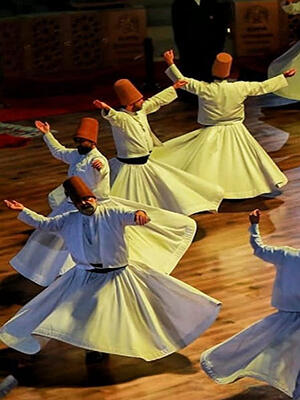
Semâ, Türk Tarihinin, an'anesinin, inançlarının bir parçası olup, Hz. Mevlana'nın (1207-1273) ilhamıyle oluşmuş ve gelişmiştir. Kemale doğru manevi bir yolculuğu (Miracı), bir gidiş-gelişi temsil eder. Semâ 7 bölümdür. Her bölümün ayrı bir manası vardır.Semâyı ilmi yönden tetkik ettiğimizde, şunu görürüz: Var olmanın temel şartı dönmektir. Varlıklar arasındaki müşterek benzerlik, en ufak zerreden en uzak yıldızlar kadar her birinin bünyesini teşkil eden atomlardaki mevcut dönmelerle, vücudundaki kanın dönmesiyle, topraktan gelip toprağa dönmesiyle, dünya ile beraber dönmesiyle tabii ve şuursuz olarak döner. Ancak insanı öbür varlıklardan farklı ve üstün kılan şey aklıdır. İşte dönen SEMAZEN varlıkların müşterek hareketine, semâyla beraber aklı da iştirak ettirir.Semâ, kulun hakikate yönelip, akılla, aşkla yücelip, nefsini terk ederek, Hakk'ta yok oluşu ve olgunluğa ermiş, kâmil bir insan olarak tekrar kulluğuna dönüşüdür.Bütün varlığa, bütün yaratılanlara yeni bir ruhla, sevgi için, hizmet için dönüşüdür... Semâzen hırkasını çıkarmakla, manen, ebedî âleme, hakikate doğar, orada yol alır... Başındaki sikkesi nefsinin mezar taşı, üstündeki tennûresi nefsinin kefenidir. Kollarını çapraz bağlayarak, görünüşte "bir" rakamını temsil eden,böylece Allah'ın birliğini tasdik eden Semâzen, Semâ ederken, kolları açık, sağ eli duâ edercesine göklere, Hak gözüyle baktığı sol eli yere dönüktür. Hakk'tan aldığı ihsanı, halka saçmasıdır. Sağdan sola kalbin etrafında dönerek, bütün insanları, bütün yaratılmışları, bütün kalbiyle sevgi ve aşkla kucaklayışıdır...
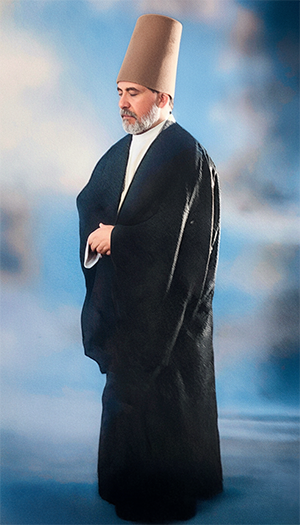
Na't-ı Şerif
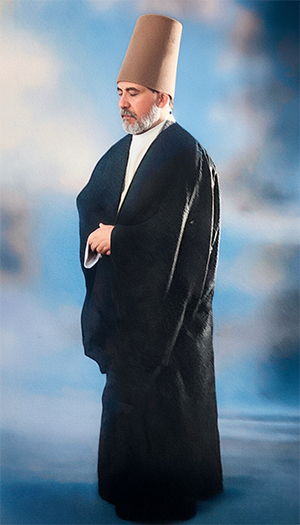
İlahi aşkı temsil eden Peygamber Efendimizi metheden bir "Na't" ile başlar. Buna "Na't-ı Şerif" denilir. Peygamberimizi methetmek, ondan evvelki bütün Peygamberleri ve hepsini yaratan Allah'ı methetmek demektir.
Na't Nedir?
Na't, Arapça kökenli bir terim olup "övgü" anlamına gelir. İslam edebiyatında özellikle Peygamber Efendimizi övmek için yazılan şiirlerdir. Na't-ı Şerif ise özel olarak Hz. Muhammed'i övmeye yönelik manzum eserlerdir.
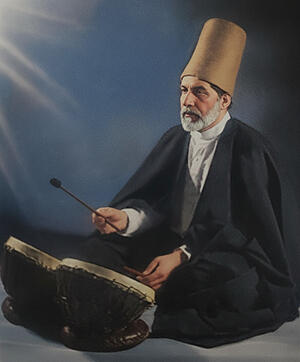
Kudüm Darpları
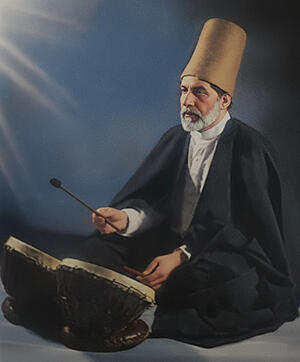
Bu methiyeden sonra bir kudüm darbesi duyulur. Bu vuruş Allah'ın (C.C) kainatı yaratılışındaki "Kün=OL" emrini temsil eder...Kudüm darbesi, semanın önemli bir parçasıdır. Bu vuruşla birlikte, semazenlerin ruhları ilahi aşkla hareket etmeye başlar. Kudüm sesi, evrenin yaratılışındaki ilk sesi temsil eder.
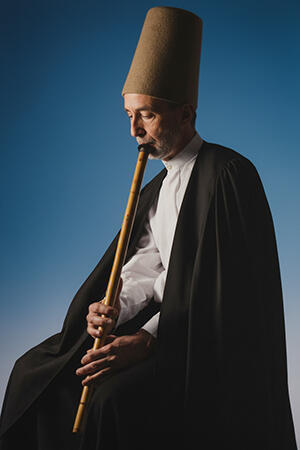
Ney Taksimi
Üçüncü bölümde ise her şeye can veren "Nefesi" nefhayı ilahiyyeyi temsil eden bir ney taksimi duyulur.Ney taksimi, semanın ruhsal boyutunu yansıtan önemli bir unsurdur. Bu bölümde ney sesi, ilahi nefesin kainata nüfuzunu ve her varlığı canlandırdığını simgeler.
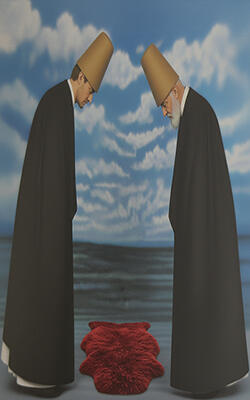
Sultan Veled Devri
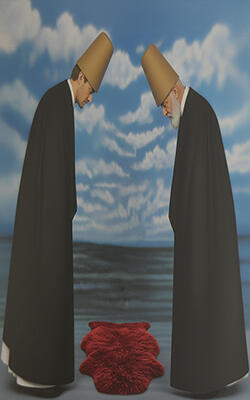
Dördüncü bölüm, sultan veled devridir. Bu, Semazenlerin birbirine üç kere selam vererek, bir peşrevle dairevi yürüyüşüdür. Bu hareket gizli ruhun ruha selamıdır.Bu bölümde semazenler, birbirlerine selam vererek manevi bir bağ kurarlar. Üç selam, üç temel erdemi (iman, ibadet, ihsan) temsil eder.
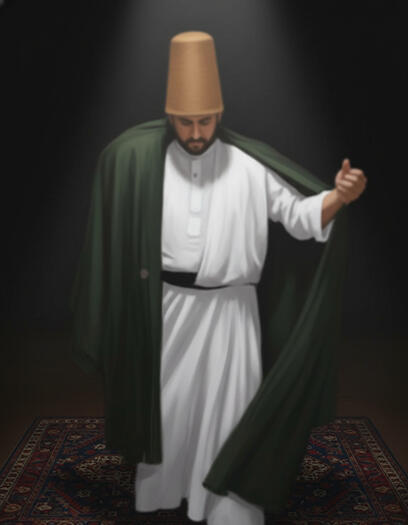
Hırka Çıkarma
Sema töreni 4 selamdır. Semazen üstündeki siyah hırkayı çıkararak, sembolik anlamda, hakikate doğarHırkanın çıkarılması, semazenin dünyevi bağlarından kurtularak ruhani bir dönüşüme başlamasını simgeler. Bu işlem, semazenin maddi âlemden soyutlanıp manevi yolculuğa başladığını gösterir.
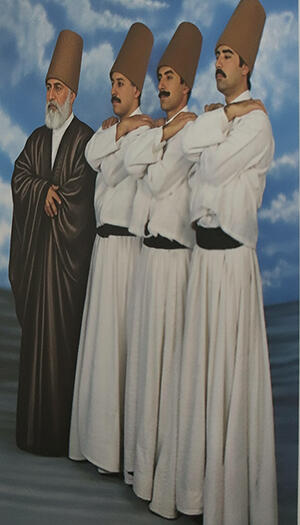
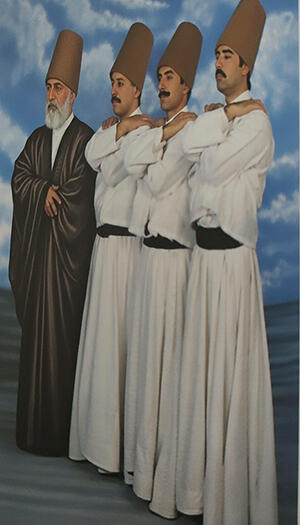
Birliğin Sembolü
Semazenler kollarını bu şekilde bağlayarak bir(1) rakamını temsil ederler. Böylece Allah'ın birliğine şehadet ederler.Bu pozisyon, semazenin ilahi birlik inancını beden diliyle ifade edişidir. "1" rakamı, Allah'ın bir ve tek oluşu sembolüdür.
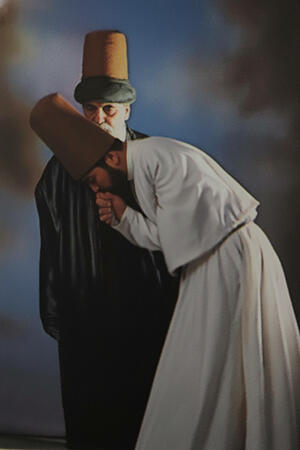
Semâ İzni Almak...
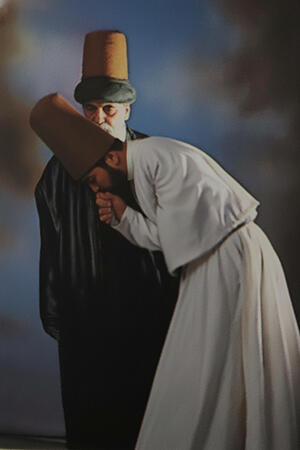
Semazenler şeyh efendi'nin elini öperek Sema'ya girme izni alırlar.
Bu tören, semazenin ruhani rehberinden izin alarak manevi yolculuğa başlaması anlamına gelir. Şeyh'in elini öpmek, onun nuru ve bereketini almak için yapılan bir uygulamadır..
Semâ'ya Başlama
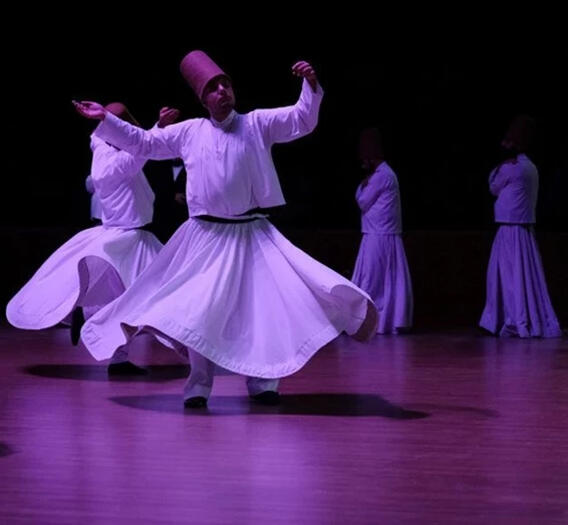
Veeee... Semazenler Sema' ya başlarlar.Bu an, semazenin manevi yolculuğuna resmi olarak başladığı andır. Kalbin etrafında dönerek ilahi aşka ulaşmaya çalışırlar.
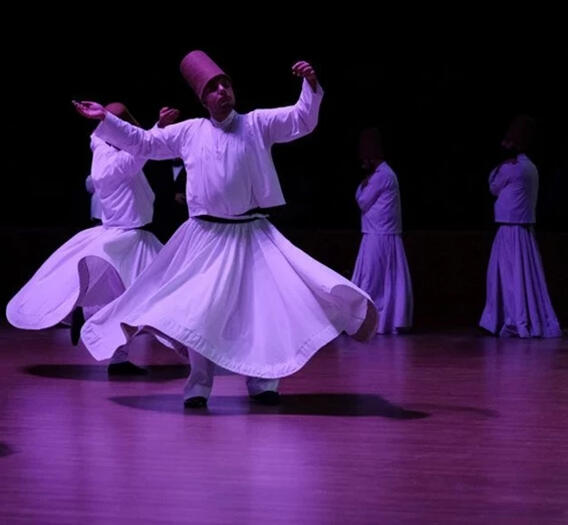
Semâ'nın Dört Selâmı
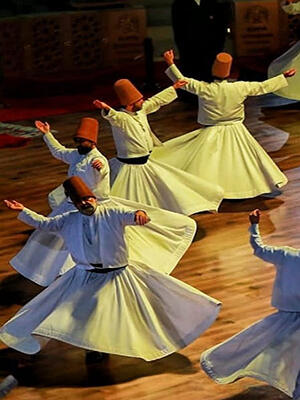
Semâ dört selâmdır.1.Selâm, insanın, bilgiyle hakikate doğarak, yüce Yaradanını ve kendi kulluğunu idrâkidir.2.Selâm, İnsanın, yaratılışındaki nizâmı, azameti müşâhede ederek, Allah'ın kudreti karşısında hayranlık duymasıdır.3.Selâm, insanın hayranlık ve minnet duygusunun "aşk"a dönüşmesiyle, "akl"ın "âşk"a kurban oluşudur. Bu tam teslîmiyettir, Allah'a vuslattır. Sevgilide yok oluştur! Budizm'de en yüksek mertebe olan "Nirvana"dır, İslamiyetteki "Fenâfillah"tır. Ancak İslâmiyette en yüksek mertebe kulluk mertebesidir.4.Selâm ise insanın manevî yolculuğunu tamamlayıp, kaderine razı olarak, yaratılıştaki vazifesine, kulluğuna dönüşüdür. Bu selâma Şeyh Efendi ve Semâzen başı da iştirak ederler.
Son Dua ve Tamamlama
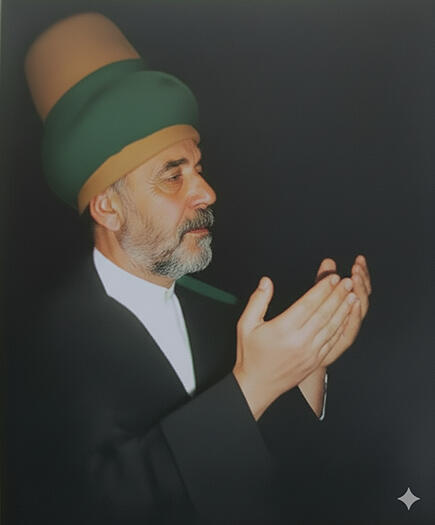
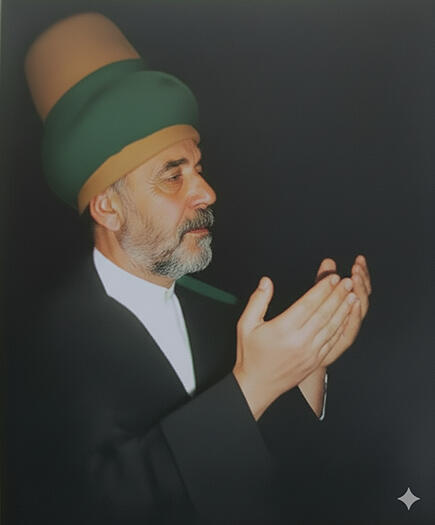
Bu noktada sermâzen, "Amene'r- Resûlü'deki(Kur'ân-ı Kerîm, Bakara 2/285) Allah'a, Meleklerine, Kitaplarına, Peygamberlerine... iman etmiş olmanın neşesiindedir. Benliğini, egosunu mağlup etmiş, Peygamber Efendimizin "Ölmeden önce ölünüz" ve Kur'ân-I Kerîm'in (Fecr 89/27-28-29-30 son ayetlerindeki)"Ey emîn ve mutmain olan nefis, sen O'ndan hoşnut, O da senden hoşnut olarak, Rabbine dön! Has kullarım zümresine gir! Onlarla beraber cennetime gir!" emirlerine uymuş ve neşesine gark olmuştur. Semâ töreninin altıncı bölümünde bilhassa "Maşrık da Allah'ındır, mağrib de. Hangi tarafa dönerseniz, Allah'ın yüzü oradadır. Çünkü Allah Vasîdir, Alîm'dir." (Bakara 2/115. âyetinin okunduğu)Kur'ân-ı Kerîm tilâvetiyle devam eder. Yedinci bölümde Semâ töreni bütün Peygamberlerin, şehitlerimizin ve bütün insanların ruhları için okunan bir Fâtiha ve devletimizin selâmeti için bir duâ ile son bulur. Dedeler ve Dervişler, Semâ mukabelesinden sonra, kimseyle konuşmadan, tefekkür (meditasyon) için sessizce hücrelerine çekilirler
Türkiye Cumhuriyeti
Kültür ve Turizm Bakanlığı
Konya Türk Tasavvuf Müziği Topluluğu
Konya Türk Tasavvuf Müziği Topluluğu, 11 Eylül 1989 tarihinde T.C Kültür ve Turizm Bakanlığı bünyesinde kurulmuş bir Türkiye Cumhuriyeti Devleti sanat kurumudur. 1990 yılında Kültür Bakanlığınca açılan sınav neticesinde topluluk oluşturulmuş ve 1991 yılı Nisan ayında Hazreti Mevlâna’ nın da dergahının ve müzesinin bulunduğu Türkiye’ nin Büyük şehirlerinden biri olan Konya’da çalışmalarına başlamıştır. Topluluk Türkiye Cumhuriyeti Devleti bünyesinde Mevlevî Müziği, Tasavvuf Müziği ve Sema Mukabeleleri konusunda ihtisaslaşmış bir sanat kurumudur. Topluluğun Kuruluşundan bu yana değerli Şef ve Müdürler tarafından yönetilen kurumun Bugün itibariyle Sanat Yönetmeni değerli müzisyen Ufuk Yürüç’ tür.Topluluğun kuruluş amacı,• Her yıl Aralık ayında Konya’da düzenlenen Hz.Mevlâna’yı anma ve Şeb-i Arûs Törenlerini daha düzenli, anlamlı, etkili ve aslına uygun bir şekilde yapmak,• Hz. Mevlâna’nın sevgi, hoşgörü ve insanlık temelindeki düşünce mirasını yurt içinde ve yurt dışında tanıtmak,• Yurtdışında planlanan kapsamlı ve prestijli kültürel faaliyetlerde hangi dil, din, ırk ve milletten olursa olsun Hazreti Mevlana’nın evrensel mesajı ile müziğin ve görselliğin uyumu içinde adına “Sema Mukabelesi” dediğimiz mistik havayı paylaşmak.• Geleneksel Türk müziği ve semâ sanatını sanatsal bir düzlemde icra ederek uluslararası kültürel platformlarda tanıtmak,• Mevlâna’nın çağlar üstü mesajını kültür, sanat ve estetik aracılığıyla canlı tutmak,• İnsan dünyanın en değerli canlısı, sosyal bir varlık, duygusal ve hisleri olan bir varlık. Bizler yaptığımız müzik ve beraberindeki Sema ile bu yaratılan en güzel varlığa hakettiği mükemmellikte ve ruhunun huzur bulacağı bir atmosfer yaratmaktayız.• Bu kapsamlar çerçevesinde Uuslararası Kültürel diplomasiye katkı sağlamak ve manevi değerlerimizi sanat yoluyla görünür kılmak hedefindeyiz.Topluluğumuz Konya’da gerçekleştirdiği periyodik programlarda, Mevlevi Ayini, Tevşih, Naat, Durak, İlahi, Nefes, Şuğul gibi dini müzik formları ile birlikte, Türk Müziğinin dini olmayan formlarından oluşturduğu konser programlarıyla da sanatseverlerin huzuruna çıkmaktadır.Topluluğumuz kuruluş amacına uygun olarak yurtiçi ve yurtdışında çok yoğun konser faaliyetlerine devam etmektedir. Dünya’ da bir çok ülkede, sayısız konser vermiş ve sema programı icra etmiştir.
Konya’da her yıl düzenli olarak 7-17 Aralık tarihlerindeki Şeb-I Arus Programları dışında yılın oniki ayı boyunca her Cumartesi günü saat 19:00 da ( Ramazan Ayında saat değişikliği olabilir.) Mevlana Kültür Merkezinde Mevlevî Müziği icramız ve beraberinde Sema Mukabelemiz düzenli olarak devam etmektedir.İşte Hazreti Mevlana’nın evrensel anlamda Tüm insanlığın gerçekten ihtiyaç duyduğumuz çağlar üstü yedi öğüdü; cömertlik, şefkat, hoşgörü, tevazu ve dürüstlük üzerine kurulu evrensel ahlaki erdemleri içerir. Bu öğütler, insanı olgunlaştırmayı ve toplumsal huzuru hedefleyen, doğadan ve yaşamdan örnekler veren rehber ilkelerdir.Hz. Mevlana’nın Yedi Öğüdü:1. Cömertlik ve yardım etmede akarsu gibi ol: İhtiyaç sahiplerine karşılıksız ve sürekli yardım etmeyi ifade eder.2. Şefkat ve merhamette güneş gibi ol: Herkese, ayrım yapmaksızın sevgi ve merhamet göstermeyi öğütler.3. Başkalarının kusurunu örtmede gece gibi ol: İnsanların hatalarını yaymamayı ve gizlemeyi (ayıp örtmeyi) simgeler.4. Hiddet ve asabiyette ölü gibi ol: Öfke anında sakin kalmayı ve kontrolden çıkmamayı anlatır.5. Tevazu ve alçak gönüllülükte toprak gibi ol: Kibirli olmamayı, mütevazı ve insanlara yakın durmayı tavsiye eder.6. Hoşgörülükte deniz gibi ol: Herkesi olduğu gibi kabul etmeyi ve geniş yürekli olmayı ifade eder.7. Ya olduğun gibi görün, ya göründüğün gibi ol: Özü sözü bir olmayı, dürüstlüğü ve içtenliği temsil eder.Bu öğütler, Mevlana'nın Mecâlis-i Seb'a (Yedi Meclis) adlı eserinden derlenmiştir.
Welcome to the Sema ceremony.
Sema & The Movement of the Cosmos
Sema is a part of Turkish history, tradition, and faith, formed and developed through the inspiration of Hz. Mevlana (1207–1273). It represents a spiritual journey toward perfection (Mi‘raj), a path of going and returning. Sema consists of seven sections, each with its own meaning.From a scientific perspective, we see that the fundamental condition of existence is rotation. The common similarity among beings—from the smallest particle to the most distant star—lies in the rotations within the atoms that form their structure, in the circulation of blood within the body, in the cycle of coming from the earth and returning to it, and in turning together with the world. All rotate naturally and unconsciously. Yet what distinguishes and elevates human beings above other creatures is reason. Thus, the whirling dervish joins the common movement of existence with the intellect through Sema.Sema is the servant’s turning toward truth, ascending with reason and love, abandoning the self, dissolving in God, and returning once more to servanthood as a mature, perfected human being.It is a return to all existence, to all creation, with a new spirit—for love, for service. By removing his cloak, the dervish is reborn spiritually into the eternal realm of truth and advances upon that path. His tall felt hat (sikke) is the tombstone of his ego, and his white robe (tennure) is its shroud. Crossing his arms upon his chest, he outwardly represents the numeral “one,” thereby affirming the unity of God.While whirling, his arms are open: the right hand raised toward the heavens in supplication, the left hand turned toward the earth, symbolizing the transmission of divine grace to humanity. Turning from right to left around the heart, he embraces all people, all creation, with love and passion.
Sacred Hymn in Praise of the Prophet
It begins with a Na‘t, a hymn praising the Prophet Muhammad, which represents divine love. This is called the Na‘t-ı Şerif. To praise the Prophet means to praise all the Prophets who came before him, and ultimately to praise God, the Creator of them all.
What is Na‘t?
Na‘t is a term of Arabic origin meaning ‘praise.’ In Islamic literature, it refers to poems written especially to praise the Prophet Muhammad. The Na‘t-ı Şerif specifically denotes poetic works composed in honor of Prophet Muhammad.
Kudüm Beats
After this hymn, a single stroke of the kudüm drum is heard. This strike symbolizes God’s command ‘Kun = Be,’ which brought the universe into existence.
The kudüm beat is an essential part of the Sema. With this stroke, the souls of the whirling dervishes begin to move with divine love. The sound of the kudüm represents the very first sound of creation.
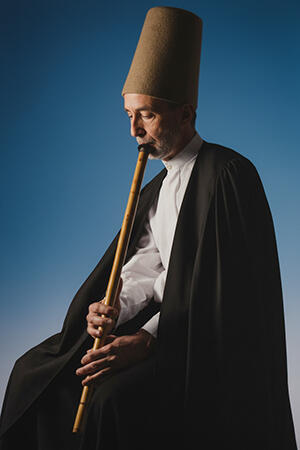
Ney Improvisation
In the third part, a ney improvisation is heard, representing the Divine Breath (nefha-i ilahiyya) that gives life to all things.
The ney improvisation is a vital element reflecting the spiritual dimension of the Sema. In this section, the sound of the ney symbolizes the penetration of the divine breath into the universe, enlivening every being.
Cycle of Sultan Veled
The fourth part is the Sultan Veled Cycle. In this section, the whirling dervishes greet one another three times and perform a circular walk accompanied by a peşrev (an instrumental prelude). This movement is understood as the hidden soul greeting the soul.
Here, the dervishes establish a spiritual bond by exchanging greetings. The three salutations symbolize the three fundamental virtues: faith (iman), worship (ibadet), and benevolence (ihsan).
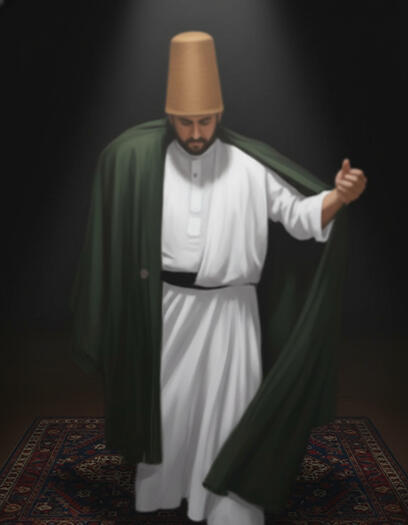
removing the black cardigan
The Sema ceremony consists of four salutations. By removing the black cloak, the dervish is symbolically reborn into the truth.
The act of taking off the cloak signifies the dervish’s release from worldly attachments and the beginning of a spiritual transformation. This gesture shows the transition from the material realm to the start of the spiritual journey.
Symbol of Unity
The dervishes cross their arms in this way to represent the number ‘1,’ bearing witness to the unity of God.
This posture expresses the dervish’s belief in divine oneness through body language. The number ‘1’ symbolizes that God is One and Unique.
Permission for Sema...
The dervishes kiss the hand of the Sheikh to receive permission to enter the Sema.
This ritual signifies the beginning of the spiritual journey, as the dervish seeks consent from his spiritual guide. Kissing the Sheikh’s hand is a practice of receiving his light and blessing...
starting the sema
And then… the dervishes begin the Sema.
This moment marks the official start of the spiritual journey. By turning around the heart, they strive to reach divine love
Four Salutations of the Sema
The Sema consists of four salutations.1st Salutation: It is the awakening of the human being to truth through knowledge, recognizing the Almighty Creator and one’s own servanthood.2nd Salutation: It is the contemplation of the order and majesty of creation, leading to awe before God’s power.3rd Salutation: It is when admiration and gratitude transform into love, as reason is sacrificed to love. This is complete submission, union with God, and annihilation in the Beloved. In Buddhism this state is called Nirvana; in Islam it is Fanā’ fī-llāh (annihilation in God). Yet in Islam, the highest rank is servanthood.4th Salutation: It is the completion of the spiritual journey, the acceptance of destiny, and the return to one’s duty of servanthood in creation. In this salutation, the Sheikh and the head dervish also participate.
Final Prayer and Completion
At this point, the dervish rejoices in the faith expressed in Āmana’r-Rasūl (Qur’an, al-Baqara 2:285): belief in God, His angels, His Books, and His Prophets. He has overcome his ego, fulfilling the Prophet Muhammad’s saying, ‘Die before you die,’ and the Qur’anic command (al-Fajr 89:27–30): ‘O tranquil soul, return to your Lord, pleased and pleasing. Enter among My devoted servants, and enter My Paradise.’ Immersed in this joy, he continues his spiritual journey.
The sixth part of the Sema proceeds with the recitation of the Qur’an, especially the verse (al-Baqara 2:115): ‘To God belong the East and the West. Wherever you turn, there is the Face of God. Truly, God is All-Encompassing, All-Knowing.’
The seventh part concludes with the recitation of al-Fātiha for all the Prophets, the martyrs, and all humanity, followed by a prayer for the well-being of the state. After the ceremony, the elders (dedeler) and dervishes withdraw silently to their cells for contemplation (tafakkur), without speaking to anyone
Republic of Türkiye
Ministry of Culture and Tourism
Konya Turkish Sufi Music Ensemble
The Konya Turkish Sufi Music Ensemble is an art institution of the Republic of Türkiye, established under the T.R. Ministry of Culture and Tourism on September 11, 1989. Following an examination held by the Ministry of Culture in 1990, the ensemble was formed and began its operations in April 1991 in Konya, one of Türkiye's major cities, where the lodge (dergah) and museum of Hazreti Mevlana are also located. The Ensemble is an art institution specialized in Mevlevi Music, Sufi Music, and Sema Ceremonies within the body of the State of the Republic of Türkiye. Directed by esteemed Conductors and Directors since its establishment, the institution's current Art Director is the esteemed musician Ufuk Yürüç.The founding purpose of the ensemble is;• To perform the Hz. Mevlana Commemoration and Şeb-i Arus Ceremonies, held every year in December in Konya, in a more organized, meaningful, effective, and authentic manner,• To promote Hz. Mevlana's heritage of thought based on love, tolerance, and humanity both domestically and internationally,• To share the mystical atmosphere we call the "Sema Ceremony" within the harmony of music and visuality with Hazreti Mevlana's universal message, regardless of language, religion, race, or nation, in comprehensive and prestigious cultural activities planned abroad.• To perform traditional Turkish music and the art of sema on an artistic level and promote them on international cultural platforms,• To keep Mevlana's timeless message alive through culture, art, and aesthetics,• The human being is the most precious living creature of the world, a social being, a being with emotions and feelings. Through the music we make and the
accompanying Sema, we create an atmosphere with the perfection this most beautifully created being deserves, where their soul will find peace.• Within these scopes, we aim to contribute to International Cultural Diplomacy and make our spiritual values visible through art.In its periodic programs held in Konya, our Ensemble presents itself to art lovers with concert programs composed of non-religious forms of Turkish Music, alongside religious music forms such as the Mevlevi Ayin (Ritual), Tevşih, Naat, Durak, İlahi, Nefes, and Şuğul.In accordance with its founding purpose, our ensemble continues its very intensive concert activities both domestically and abroad. It has given countless concerts and performed sema programs in many countries around the world.In Konya, apart from the regular Şeb-i Arus Programs held every year between December 7-17, our Mevlevi Music performance and accompanying Sema Ceremony continue regularly every Saturday at 19:00 (hours may change during the month of Ramadan) at the Mevlana Cultural Center throughout the twelve months of the year.Here are Hazreti Mevlana'stimeless seven advices, which all humanity truly needs in a universal sense; they contain universal moral virtues built upon generosity, compassion, tolerance, humility, and honesty. These advices are guiding principles that aim to mature the human being and achieve social peace, giving examples from nature and life.Hz. Mevlana's Seven Advices:1. In generosity and helping others, be like a flowing river: It expresses helping those in need unconditionally and continuously.2. In compassion and mercy, be like the sun: It advises showing love and mercy to everyone without discrimination.3. In concealing others' flaws, be like the night: It symbolizes not spreading and concealing people's mistakes (covering faults).4. In anger and fury, be like the dead: It describes remaining calm in moments of anger and not losing control.5. In modesty and humility, be like the earth: It recommends not being arrogant, but being humble and staying close to people.6. In tolerance, be like the sea: It expresses accepting everyone as they are and being broad-hearted.7. Either appear as you are, or be as you appear: It represents having one's essence and words be the same, honesty, and sincerity.These advices have been compiled from Mevlana's work named Mecâlis-i Seb'a (Seven Sessions).