Language


SEMA & KÂİNATIN HAREKETİ
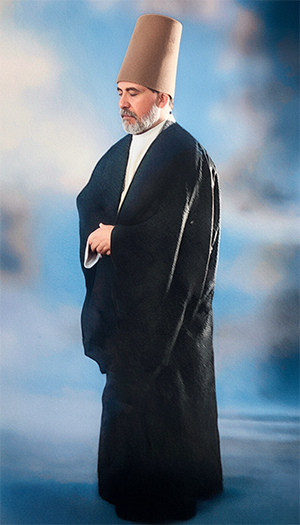
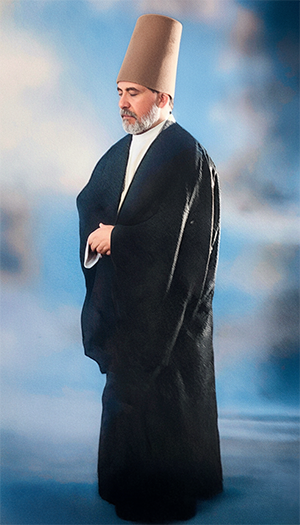
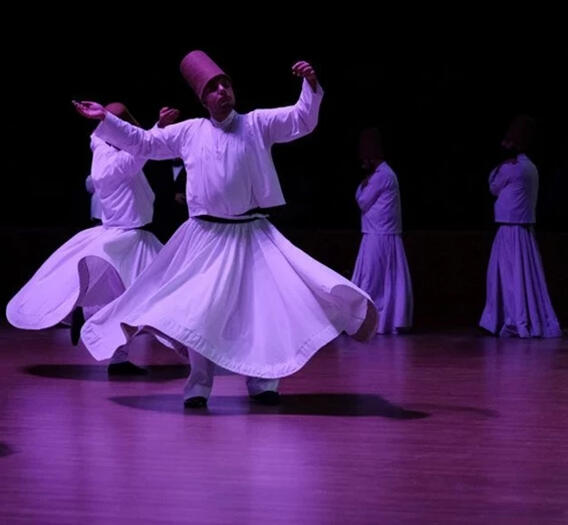
Semâ, Türk Tarihinin, an'anesinin, inançlarının bir parçası olup, Hz. Mevlana'nın (1207-1273) ilhamıyle oluşmuş ve gelişmiştir. Kemale doğru manevi bir yolculuğu (Miracı), bir gidiş-gelişi temsil eder. Semâ 7 bölümdür. Her bölümün ayrı bir manası vardır.Semâyı ilmi yönden tetkik ettiğimizde, şunu görürüz: Var olmanın temel şartı dönmektir. Varlıklar arasındaki müşterek benzerlik, en ufak zerreden en uzak yıldızlar kadar her birinin bünyesini teşkil eden atomlardaki mevcut dönmelerle, vücudundaki kanın dönmesiyle, topraktan gelip toprağa dönmesiyle, dünya ile beraber dönmesiyle tabii ve şuursuz olarak döner. Ancak insanı öbür varlıklardan farklı ve üstün kılan şey aklıdır. İşte dönen SEMAZEN varlıkların müşterek hareketine, semâyla beraber aklı da iştirak ettirir.Semâ, kulun hakikate yönelip, akılla, aşkla yücelip, nefsini terk ederek, Hakk'ta yok oluşu ve olgunluğa ermiş, kâmil bir insan olarak tekrar kulluğuna dönüşüdür.Bütün varlığa, bütün yaratılanlara yeni bir ruhla, sevgi için, hizmet için dönüşüdür... Semâzen hırkasını çıkarmakla, manen, ebedî âleme, hakikate doğar, orada yol alır... Başındaki sikkesi nefsinin mezar taşı, üstündeki tennûresi nefsinin kefenidir. Kollarını çapraz bağlayarak, görünüşte "bir" rakamını temsil eden,böylece Allah'ın birliğini tasdik eden Semâzen, Semâ ederken, kolları açık, sağ eli duâ edercesine göklere, Hak gözüyle baktığı sol eli yere dönüktür. Hakk'tan aldığı ihsanı, halka saçmasıdır. Sağdan sola kalbin etrafında dönerek, bütün insanları, bütün yaratılmışları, bütün kalbiyle sevgi ve aşkla kucaklayışıdır...
Welcome to the Mevlevi Sema Ceremony
Sema & The Movement of the Cosmos
Sema is a part of Turkish history, tradition, and faith, formed and developed through the inspiration of Hz. Mevlana (1207–1273). It represents a spiritual journey toward perfection (Mi‘raj), a path of going and returning. Sema consists of seven sections, each with its own meaning.From a scientific perspective, we see that the fundamental condition of existence is rotation. The common similarity among beings—from the smallest particle to the most distant star—lies in the rotations within the atoms that form their structure, in the circulation of blood within the body, in the cycle of coming from the earth and returning to it, and in turning together with the world. All rotate naturally and unconsciously. Yet what distinguishes and elevates human beings above other creatures is reason. Thus, the whirling dervish joins the common movement of existence with the intellect through Sema.Sema is the servant’s turning toward truth, ascending with reason and love, abandoning the self, dissolving in God, and returning once more to servanthood as a mature, perfected human being.It is a return to all existence, to all creation, with a new spirit—for love, for service. By removing his cloak, the dervish is reborn spiritually into the eternal realm of truth and advances upon that path. His tall felt hat (sikke) is the tombstone of his ego, and his white robe (tennure) is its shroud. Crossing his arms upon his chest, he outwardly represents the numeral “one,” thereby affirming the unity of God.While whirling, his arms are open: the right hand raised toward the heavens in supplication, the left hand turned toward the earth, symbolizing the transmission of divine grace to humanity. Turning from right to left around the heart, he embraces all people, all creation, with love and passion.
Na't-ı Şerif
İlahi aşkı temsil eden Peygamber Efendimizi metheden bir "Na't" ile başlar. Buna "Na't-ı Şerif" denilir. Peygamberimizi methetmek, ondan evvelki bütün Peygamberleri ve hepsini yaratan Allah'ı methetmek demektir.
Na't Nedir?
Na't, Arapça kökenli bir terim olup "övgü" anlamına gelir. İslam edebiyatında özellikle Peygamber Efendimizi övmek için yazılan şiirlerdir. Na't-ı Şerif ise özel olarak Hz. Muhammed'i övmeye yönelik manzum eserlerdir.
Sacred Hymn in Praise of the Prophet
It begins with a Na‘t, a hymn praising the Prophet Muhammad, which represents divine love. This is called the Na‘t-ı Şerif. To praise the Prophet means to praise all the Prophets who came before him, and ultimately to praise God, the Creator of them all.
What is Na‘t?
Na‘t is a term of Arabic origin meaning ‘praise.’ In Islamic literature, it refers to poems written especially to praise the Prophet Muhammad. The Na‘t-ı Şerif specifically denotes poetic works composed in honor of Prophet Muhammad.
Kudüm Darpları
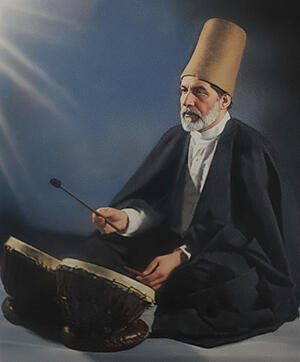
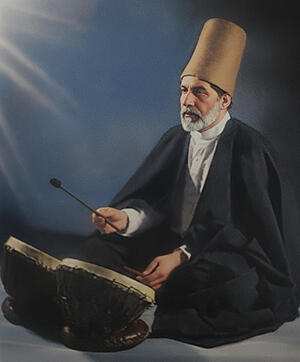
Bu methiyeden sonra bir kudüm darbesi duyulur. Bu vuruş Allah'ın (C.C) kainatı yaratılışındaki "Kün=OL" emrini temsil eder...Kudüm darbesi, semanın önemli bir parçasıdır. Bu vuruşla birlikte, semazenlerin ruhları ilahi aşkla hareket etmeye başlar. Kudüm sesi, evrenin yaratılışındaki ilk sesi temsil eder.
Kudüm Beats
After this hymn, a single stroke of the kudüm drum is heard. This strike symbolizes God’s command ‘Kun = Be,’ which brought the universe into existence.
The kudüm beat is an essential part of the Sema. With this stroke, the souls of the whirling dervishes begin to move with divine love. The sound of the kudüm represents the very first sound of creation.
Ney Taksimi
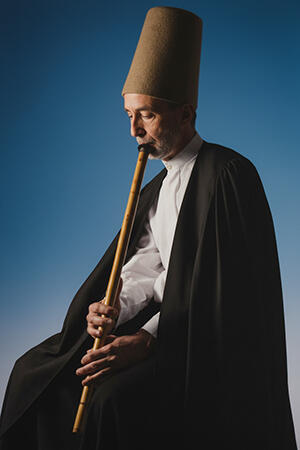
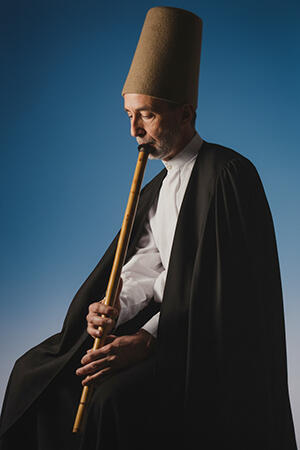
Üçüncü bölümde ise her şeye can veren "Nefesi" nefhayı ilahiyyeyi temsil eden bir ney taksimi duyulur.Ney taksimi, semanın ruhsal boyutunu yansıtan önemli bir unsurdur. Bu bölümde ney sesi, ilahi nefesin kainata nüfuzunu ve her varlığı canlandırdığını simgeler.
Ney Improvisation
In the third part, a ney improvisation is heard, representing the Divine Breath (nefha-i ilahiyya) that gives life to all things.
The ney improvisation is a vital element reflecting the spiritual dimension of the Sema. In this section, the sound of the ney symbolizes the penetration of the divine breath into the universe, enlivening every being.
Sultan Veled Devri
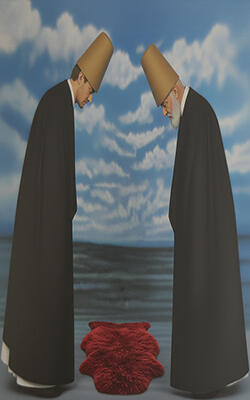
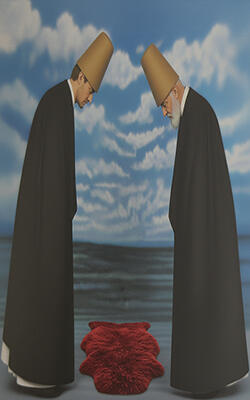
Dördüncü bölüm, sultan veled devridir. Bu, Semazenlerin birbirine üç kere selam vererek, bir peşrevle dairevi yürüyüşüdür. Bu hareket gizli ruhun ruha selamıdır.Bu bölümde semazenler, birbirlerine selam vererek manevi bir bağ kurarlar. Üç selam, üç temel erdemi (iman, ibadet, ihsan) temsil eder.
Cycle of Sultan Veled
The fourth part is the Sultan Veled Cycle. In this section, the whirling dervishes greet one another three times and perform a circular walk accompanied by a peşrev (an instrumental prelude). This movement is understood as the hidden soul greeting the soul.
Here, the dervishes establish a spiritual bond by exchanging greetings. The three salutations symbolize the three fundamental virtues: faith (iman), worship (ibadet), and benevolence (ihsan).
Hırka Çıkarma
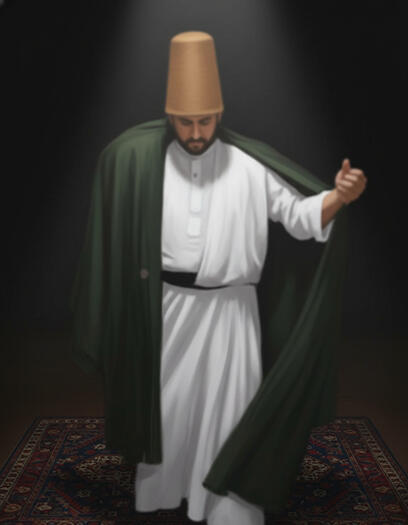
Sema töreni 4 selamdır. Semazen üstündeki siyah hırkayı çıkararak, sembolik anlamda, hakikate doğarHırkanın çıkarılması, semazenin dünyevi bağlarından kurtularak ruhani bir dönüşüme başlamasını simgeler. Bu işlem, semazenin maddi âlemden soyutlanıp manevi yolculuğa başladığını gösterir.
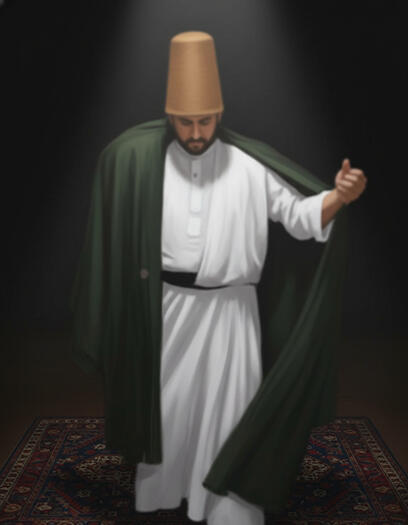
removing the black cardigan
The Sema ceremony consists of four salutations. By removing the black cloak, the dervish is symbolically reborn into the truth.
The act of taking off the cloak signifies the dervish’s release from worldly attachments and the beginning of a spiritual transformation. This gesture shows the transition from the material realm to the start of the spiritual journey.
Birliğin Sembolü
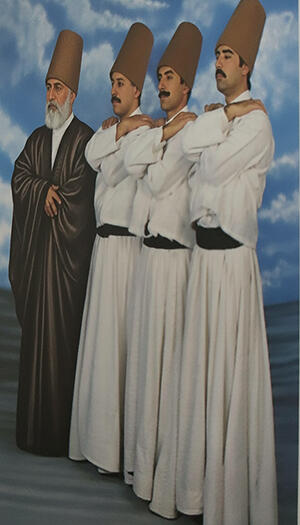
Semazenler kollarını bu şekilde bağlayarak bir(1) rakamını temsil ederler. Böylece Allah'ın birliğine şehadet ederler.Bu pozisyon, semazenin ilahi birlik inancını beden diliyle ifade edişidir. "1" rakamı, Allah'ın bir ve tek oluşu sembolüdür.
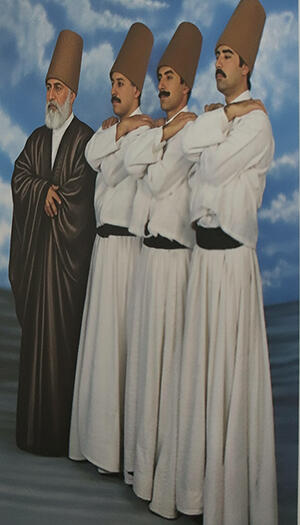
Symbol of Unity
The dervishes cross their arms in this way to represent the number ‘1,’ bearing witness to the unity of God.
This posture expresses the dervish’s belief in divine oneness through body language. The number ‘1’ symbolizes that God is One and Unique.
Semâ İzni Almak...
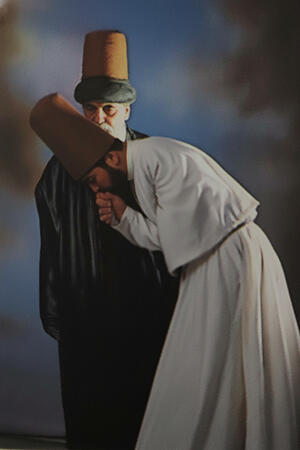
Semazenler şeyh efendi'nin elini öperek Sema'ya girme izni alırlar.
Bu tören, semazenin ruhani rehberinden izin alarak manevi yolculuğa başlaması anlamına gelir. Şeyh'in elini öpmek, onun nuru ve bereketini almak için yapılan bir uygulamadır..
Permission for Sema...
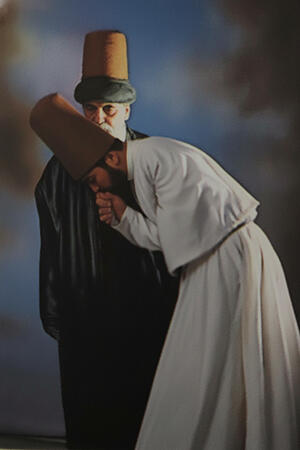
The dervishes kiss the hand of the Sheikh to receive permission to enter the Sema.
This ritual signifies the beginning of the spiritual journey, as the dervish seeks consent from his spiritual guide. Kissing the Sheikh’s hand is a practice of receiving his light and blessing...
Semâ'ya Başlama
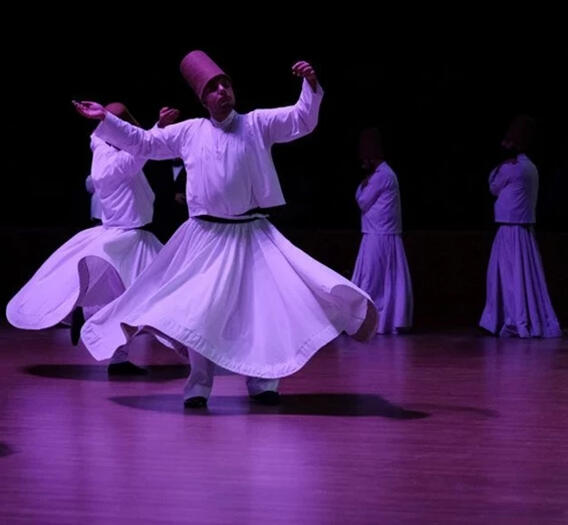
Veeee... Semazenler Sema' ya başlarlar.Bu an, semazenin manevi yolculuğuna resmi olarak başladığı andır. Kalbin etrafında dönerek ilahi aşka ulaşmaya çalışırlar.
starting the sema
And then… the dervishes begin the Sema.
This moment marks the official start of the spiritual journey. By turning around the heart, they strive to reach divine love
Semâ'nın Dört Selâmı
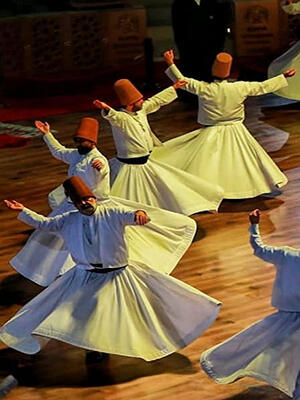
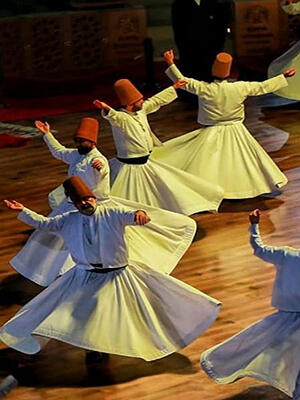
Semâ dört selâmdır.1.Selâm, insanın, bilgiyle hakikate doğarak, yüce Yaradanını ve kendi kulluğunu idrâkidir.2.Selâm, İnsanın, yaratılışındaki nizâmı, azameti müşâhede ederek, Allah'ın kudreti karşısında hayranlık duymasıdır.3.Selâm, insanın hayranlık ve minnet duygusunun "aşk"a dönüşmesiyle, "akl"ın "âşk"a kurban oluşudur. Bu tam teslîmiyettir, Allah'a vuslattır. Sevgilide yok oluştur! Budizm'de en yüksek mertebe olan "Nirvana"dır, İslamiyetteki "Fenâfillah"tır. Ancak İslâmiyette en yüksek mertebe kulluk mertebesidir.4.Selâm ise insanın manevî yolculuğunu tamamlayıp, kaderine razı olarak, yaratılıştaki vazifesine, kulluğuna dönüşüdür. Bu selâma Şeyh Efendi ve Semâzen başı da iştirak ederler.
Four Salutations of the Sema
The Sema consists of four salutations.1st Salutation: It is the awakening of the human being to truth through knowledge, recognizing the Almighty Creator and one’s own servanthood.2nd Salutation: It is the contemplation of the order and majesty of creation, leading to awe before God’s power.3rd Salutation: It is when admiration and gratitude transform into love, as reason is sacrificed to love. This is complete submission, union with God, and annihilation in the Beloved. In Buddhism this state is called Nirvana; in Islam it is Fanā’ fī-llāh (annihilation in God). Yet in Islam, the highest rank is servanthood.4th Salutation: It is the completion of the spiritual journey, the acceptance of destiny, and the return to one’s duty of servanthood in creation. In this salutation, the Sheikh and the head dervish also participate.
Son Dua ve Tamamlama
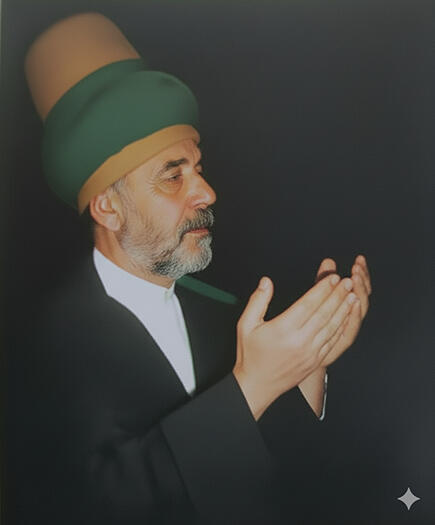
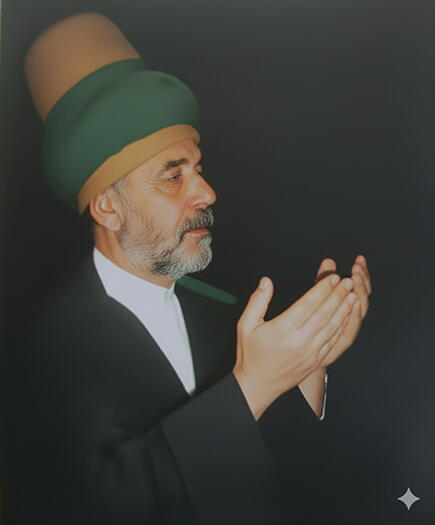
Bu noktada sermâzen, "Amene'r- Resûlü'deki(Kur'ân-ı Kerîm, Bakara 2/285) Allah'a, Meleklerine, Kitaplarına, Peygamberlerine... iman etmiş olmanın neşesiindedir. Benliğini, egosunu mağlup etmiş, Peygamber Efendimizin "Ölmeden önce ölünüz" ve Kur'ân-I Kerîm'in (Fecr 89/27-28-29-30 son ayetlerindeki)"Ey emîn ve mutmain olan nefis, sen O'ndan hoşnut, O da senden hoşnut olarak, Rabbine dön! Has kullarım zümresine gir! Onlarla beraber cennetime gir!" emirlerine uymuş ve neşesine gark olmuştur. Semâ töreninin altıncı bölümünde bilhassa "Maşrık da Allah'ındır, mağrib de. Hangi tarafa dönerseniz, Allah'ın yüzü oradadır. Çünkü Allah Vasîdir, Alîm'dir." (Bakara 2/115. âyetinin okunduğu)Kur'ân-ı Kerîm tilâvetiyle devam eder. Yedinci bölümde Semâ töreni bütün Peygamberlerin, şehitlerimizin ve bütün insanların ruhları için okunan bir Fâtiha ve devletimizin selâmeti için bir duâ ile son bulur. Dedeler ve Dervişler, Semâ mukabelesinden sonra, kimseyle konuşmadan, tefekkür (meditasyon) için sessizce hücrelerine çekilirler
Final Prayer and Completion
At this point, the dervish rejoices in the faith expressed in Āmana’r-Rasūl (Qur’an, al-Baqara 2:285): belief in God, His angels, His Books, and His Prophets. He has overcome his ego, fulfilling the Prophet Muhammad’s saying, ‘Die before you die,’ and the Qur’anic command (al-Fajr 89:27–30): ‘O tranquil soul, return to your Lord, pleased and pleasing. Enter among My devoted servants, and enter My Paradise.’ Immersed in this joy, he continues his spiritual journey.
The sixth part of the Sema proceeds with the recitation of the Qur’an, especially the verse (al-Baqara 2:115): ‘To God belong the East and the West. Wherever you turn, there is the Face of God. Truly, God is All-Encompassing, All-Knowing.’
The seventh part concludes with the recitation of al-Fātiha for all the Prophets, the martyrs, and all humanity, followed by a prayer for the well-being of the state. After the ceremony, the elders (dedeler) and dervishes withdraw silently to their cells for contemplation (tafakkur), without speaking to anyone